Prime Highlights
- 74% of security professionals reported gender-based discrimination despite 92.7% of organisations having formal inclusion policies.
- Leaders called for inclusion to be measured as a business outcome, not managed as a diversity programme.
Key Facts
- WISS 2026 is based on responses from 730 security professionals, conducted by IIIRIS Consulting with the CII Centre of Women Leadership.
- Women make up 43% of India’s STEM graduates but only 14% of the STEM workforce.
Background
With AI transforming businesses and companies struggling to manage their corporate governance, female leaders in all industries have a strong case to make: diversity needs to be measured as a business success, not as a separate diversity program.
That message came through clearly at the India Women Leadership and Growth Summit 2026, where leaders from real estate, shipping, law, philanthropy, governance, and venture capital moved the conversation well beyond headcount and representation.
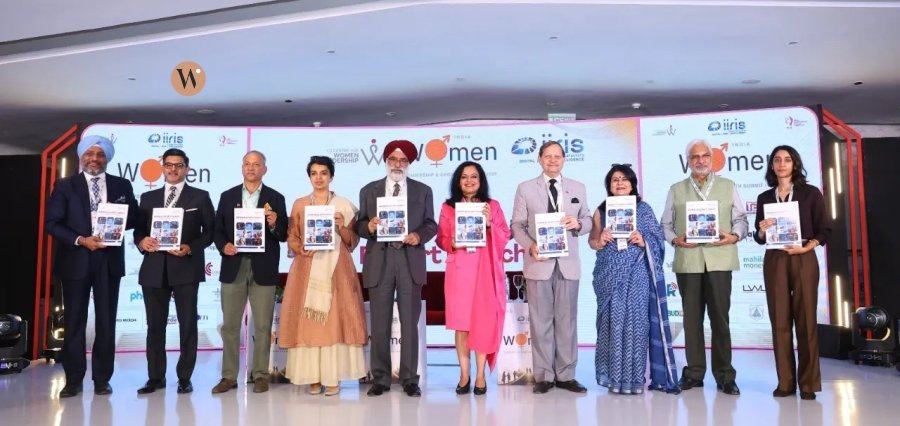
A key trigger for that shift was the Women in Security Survey (WISS) 2026, conducted by IIIRIS Consulting in collaboration with the CII Centre of Women Leadership. Based on responses from 730 security professionals, the report found that 92.7 per cent of organisations have formal inclusion policies in place, yet 74 per cent of respondents said they had personally experienced or witnessed gender-based discrimination at work. A further 84.5 per cent said women remain under-represented across security functions.
The numbers point to a persistent gap between policy adoption and actual workplace experience.
On the action side, organisers announced a collaboration between NITI Aayog’s Women Entrepreneurship Platform and IIIRIS to create structured pathways for women into cybersecurity, digital forensics, and related fields through education, mentorship, and entrepreneurship support.
The newly launched Marutra Centre for Security Studies is also committed to sponsoring two PhD candidates, with at least one position always reserved for a woman.
Speakers stressed that AI presents a rare opportunity to build inclusion from the ground up. With roughly 71 per cent of AI-related roles currently held by men, leaders warned that familiar imbalances risk repeating themselves in emerging sectors unless organisations act now.